Skip to content
SEO

The Ultimate Guide to SEO For Small Businesses in 2025

Victoria N.
Victoria N. |

Why SEO Still Matters in 2025

Search engine optimization (SEO) continues to be one of the most effective, affordable tools for small businesses to attract qualified traffic and grow their customer base. In 2025, as search engines evolve with AI and Google shifts toward conversational search and predictive answers, SEO isn’t just about keywords—it’s about being found where and when your audience needs you.

Whether you’re a service provider, local shop, or freelancer, SEO is your digital handshake. This guide breaks it down into manageable steps to help you improve your visibility without needing a tech background or a big budget.

What Is SEO in 2025?

SEO, or search engine optimization, is the process of making your business discoverable online by improving your visibility in search results. In 2025, it encompasses a range of efforts, including:

  • Local SEO: Optimizing your business for local search queries like “plumber near me”

  • On-Page SEO: Structuring your website pages properly with keywords, headings, and meta tags

  • Technical SEO: Ensuring your site is fast, secure, and mobile-friendly

  • Content SEO: Publishing valuable, keyword-rich content that helps your audience

Search is now more dynamic, and AI plays a larger role than ever. People expect conversational results, quick answers, and personalized suggestions. A strong SEO strategy helps you stay ahead.

Step-by-Step SEO Action Plan for Small Businesses

Day 1: Claim & Fully Optimize Your Google Business Profile

Your Google Business Profile (GBP) is the cornerstone of local SEO. It allows customers to find you in Google Maps and local search.

To optimize your GBP:

  • Add a compelling business description

  • Upload a logo, cover photo, and at least 5 high-quality images

  • List all services and products

  • Respond to reviews and post updates regularly

Businesses with complete listings and updated photos receive 42% more direction requests and 35% more click-throughs to their websites.

Need help setting up your Google Business Profile? Give us a call!

Day 2: Define Your Ideal Customer Avatar (ICA)

Understanding who you're speaking to is foundational. Your ICA includes demographics, pain points, goals, and search behavior.

Ask yourself:

  • Who is my ideal customer?

  • What are they searching for?

  • How can I solve their problems better than my competitors?

Use this insight to guide your keyword choices and content strategy.

Download our FREE ICA worksheet here.

Day 3: Set Up or Review Your Website

Your website should be fast, functional, and clear. Even one-page websites can rank well if built with intention.

Checklist:

  • Mobile responsive design

  • Clear navigation with service/location keywords

  • Proper H1, H2 structure and internal linking

  • Include keywords like “affordable landscaping in [city]” or “best family dentist near [zip code]”

Click here for our free website audit!

Day 4: Create or Refresh Your Lead Magnet

Lead magnets help you grow your email list, which you can use to drive repeat traffic and boost SEO signals.

Ideas include:

  • Free checklists

  • Beginner guides

  • Exclusive discounts

Use SEO-driven titles like: “Free Small Business SEO Checklist” or “7 Marketing Hacks for Local Businesses”

Day 5: Launch a Simple Social Media Plan

Social media supports SEO by driving traffic and earning backlinks.

Try this plan:

  • 3 posts per week: 1 educational, 1 promotional, 1 testimonial

  • Use keywords in captions (e.g., “Looking for a local roofing company?”)

  • Share blog posts to build link authority

Day 6: Ask for 2 Reviews

Reviews build credibility and help your GBP rank higher in local results.

Best practices:

  • Ask happy customers directly

  • Include a link to your review page

  • Respond to all reviews, positive or negative

Keywords in reviews (e.g., “best dog groomer in Dallas”) can also help your SEO.

We help small business owners craft SEO optimized templates to send to previous customers. Call us today for help optimizing your customer reviews!

Day 7: Build a Basic Follow-Up System

Follow-up emails and automations keep your audience engaged and boost on-site activity.

Simple tools:

  • Email tools like MailerLite or ConvertKit

  • Create a welcome email with blog content and service links

  • Add an opt-in form to your homepage and blog sidebar

Common SEO Mistakes Small Business Owners Should Avoid

  • Keyword stuffing instead of natural placement

  • Neglecting your Google Business Profile

  • Not optimizing for mobile users

  • Failing to update your content

  • Relying only on social media for visibility

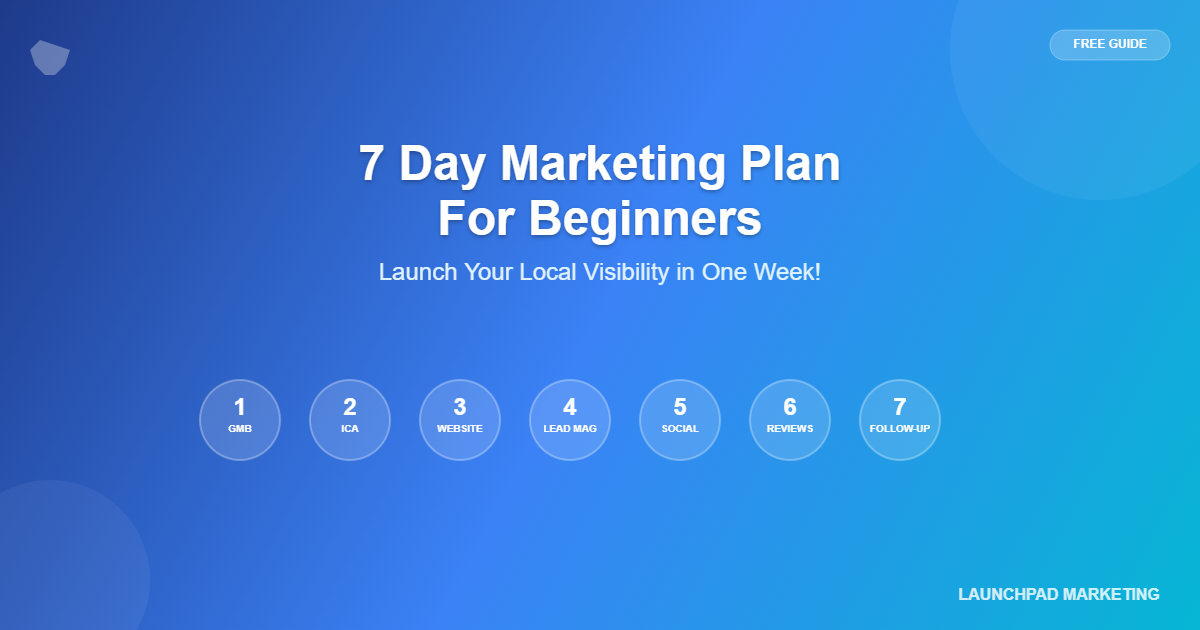
Ready to Start? Grab Your Free 7-Day Marketing Plan

This SEO guide is just one part of your bigger marketing picture. If you're ready to take action and see results, grab our free beginner-friendly 7-Day Marketing Plan. It walks you through each task with simple steps so you can start seeing traffic and leads fast.

Download the Free Plan

For more insight into other challenges small businesses face, and how to overcome them, read our companion post: Top Marketing Challenges Small Businesses Face in 2025

Final Thoughts

SEO doesn’t have to be overwhelming or expensive. With a clear plan and consistent action, even a brand-new business can start seeing traffic in just a few weeks. Start small, stay focused, and don’t be afraid to ask for help. You’ve got this!

Share this post